


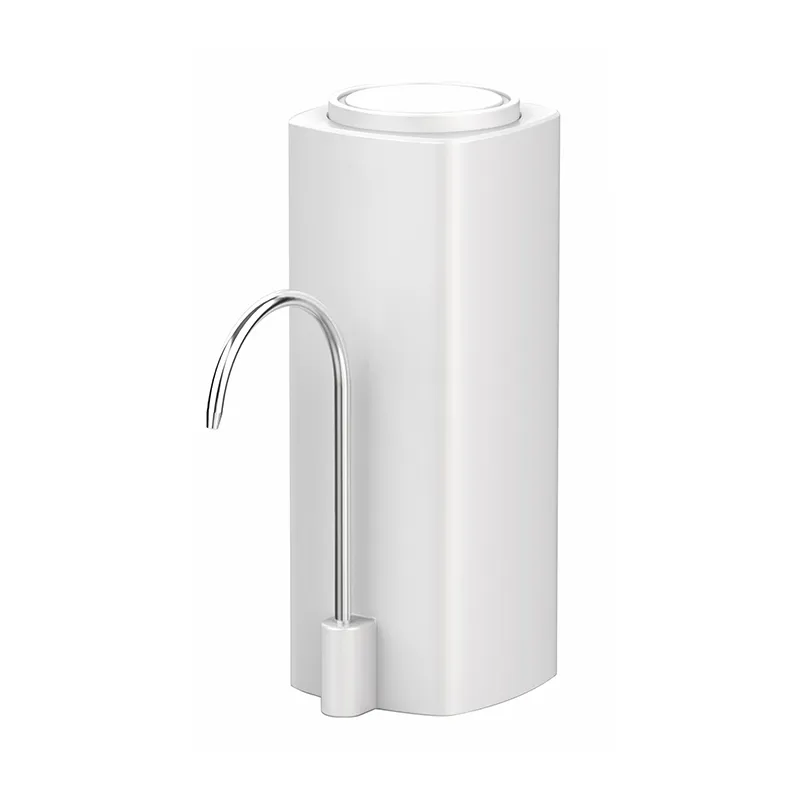
◆ Counter Top UF Quick Change Water Filter
◆ Inside with one stage quick change filter
◆ With universal adapter can install on the kitchen faucet directly
◆ Cartridges...
UF Water Filter
What is UF Water Filter
UF water filter stands for Ultrafiltration water filter. It is a membrane-based filtration technology that uses a semi-permeable membrane with pores small enough to remove bacteria, viruses, and suspended solids from water, but typically allows larger molecules such as salts, sugars, and proteins to pass through.
Why Choose Us
01/
Our History
Ningbo Blue Pluser Appliance Co.,Ltd sarted from bottled water since 1995 make bottled water, bottled water pump, bottled water handle etc.
02/
Our Factory
With 300 skilled professionals and seven advanced production lines, our factory is a testament to precision engineering and technological prowess.
03/
Our Certificate
We have the NSF, Water Mark, LFGB, FDA, SGS, WQA, CE, RoHS, UL, CCC, ISO 9001, ISO 14000:14001 certifications.
04/
Product Application
Our water filtration systems find application across diverse sectors, including, reverse osmosis water filtration, coffee machine filter, residential, commercial, and industrial settings.
05/
Production Market
Our footprint extends across the globe, with products reaching over 50 countries. The international market presence is a testament to the trust and confidence that customers place in our water filtration solutions.
06/
Our Service
Beyond manufacturing, Blue Pluser places a strong emphasis on customer satisfaction. Our commitment to service goes beyond the sale, as we provide comprehensive support to our customers.
-
![Desk Top Single Stage UF Water Filter]()
-
![Under Sink 4 in 1 UF Water Filter]() Under Sink 4 in 1 UF Water Filter◆ 4 in 1 filter pleated PP + Carbon block + UF + coconut carbon filterread more
Under Sink 4 in 1 UF Water Filter◆ 4 in 1 filter pleated PP + Carbon block + UF + coconut carbon filterread more
◆ With bypass valve no need to close the T valve
◆ Filter weight: 2.33KGS
◆ Flow rate: 2 Liter/min -
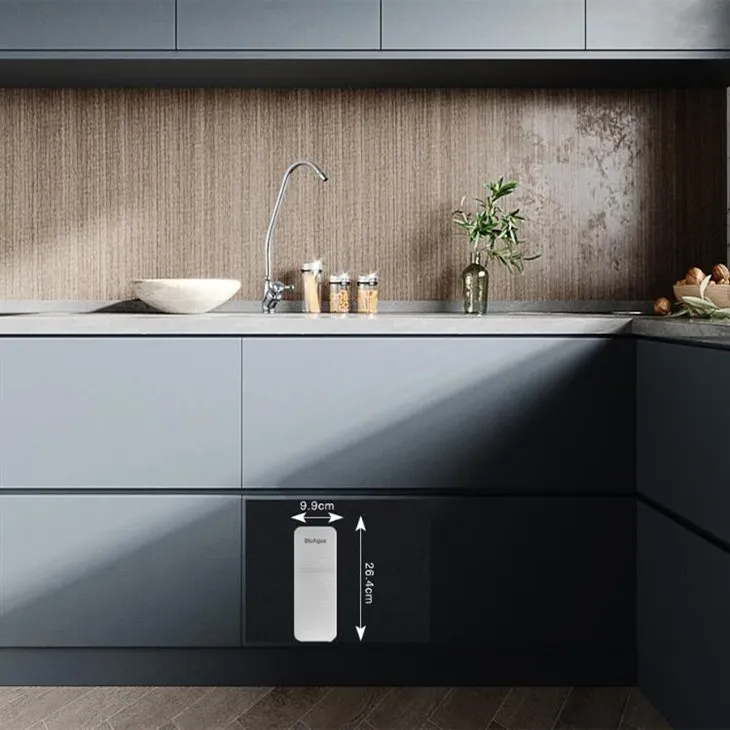
![Undersink 3 Stage UF Water Filter]() Undersink 3 Stage UF Water Filter◆ Super Slim DIY UF Water Filterread more
Undersink 3 Stage UF Water Filter◆ Super Slim DIY UF Water Filterread more
◆ Quick change Filter
◆ (PP/Carbon) + UF + Coconut carbon
◆ Stage 1 = 5 micron sediment + 0.5 micron carbon block


What is UF in Water Purifier?
In a water purifier, UF stands for Ultra-filtration. It is a membrane-based technology that is used to purify water. This technology-based water purifier doesn't require electricity for operation, and it can work properly with the normal tap water pressure. In addition, the UF in a water purifier can eliminate larger molecules of bacteria, viruses, and fungus.
The UF technology-based purifier is similar in function with RO technology-based purifier, but these two have a significant difference, and that is nothing but the pore size of the membrane used in these technologies. The UF membrane used in the water purifier has a pore size of 0.01 µm.
When the water passes through the UF membrane, the membrane doesn't allow the molecules to have a molecular size higher than 0.01 µm. Thus it brings crystal clear water for consumption.
Advantages of UF Water Filter
Works without electricity: Requires just normal pipe water pressure.
Actually removes the germs from water: Even if the UV water purifier kills the germs in the water, their bodies remain in the water, whereas in UF water purifier all germs and viruses are physically removed from the water and flushed out to the drain when the UF water purifier is flush cleaned online.
Can purify even cloudy turbid muddy water: UF can handle turbid or muddy water and can purify all the dirt and germs by physically removing it from the water. UV cannot purify turbid muddy water because the germs in the water will be shielded from the UV rays by the turbid dirty water particles.
Better than boiled water:In boiled water the dirt, boiled germs and their eggs remain in the water, while UF Membranes filter out all dirt, germs and their eggs.
No need of annual maintenance contract:A unique manual flushing system drains out all blocked germs and dirt which keeps UF Water purifiers in top condition for many years.
Long lasting:With proper care UF water purifiers can work upto 10 years before major service by manufacturer is required.
Fail Safe: Will never give impure water, UF membranes are very tough and will not break and pass impure water. The worst that can happen is that the UF water purifier flow get reduced or blocked, but this can be cleaned to restore flow. Ultraviolet UV water purifiers cannot claim this, because with time, the UV light gets dimmer and even blocked with scale on the UV lamp, and thus becomes ineffective. There is no warning from the UV water filter purifier when this happens and you are getting unsafe water.
Filters out even eggs of Germs : Removes from water the highly Chlorine resistant eggs (cysts) of Amoebic dysentery and Gastroenteritis germs - Giardiasis and Cryptosporidiosis. Some water purifiers use very strong, harmful to human consumption chlorine chemicals, to kill the germs, but their eggs (cysts) are not destroyed. The eggs (cysts) have very hard protective shells which cannot be penetrated by chlorine chemicals. Also the dead germs and their active eggs are not filtered out of the water in these purifiers.
As good as RO purifier: Ultrafiltration membrane water purifiers are as good as Reverse Osmosis water purifiers when used with public or Municipal supplied pipe or tap water. Piped tap water will not have problems with dissolved salts of toxic chemicals like Arsenic or Heavy Metals. RO is only required when the water has too much dissolved salts.
Works without Electricity: UF water purifiers work even during power cuts and power outages.
What Is Ultrafiltration's Role in Water Treatment?
Ultrafiltration with semipermeable membranes can play an important role in water purification.
Because of its compactness and efficiency.
Ultrafiltration (UF) is a water purification process in which water is forced through a semipermeable membrane. Suspended solids and high-molecular-weight solutes remain on one side of the membrane, the retentate side, while water and low-molecular-weight solutes filter through the membrane to the permeate side.
UF can remove most organic molecules and viruses, as well as a range of salts. It has gained popularity because it produces a stable water quality no matter the source water, has a compact physical footprint, removes 90-100% of pathogens, and does not require chemicals, except for cleaning membranes.
UF was first described at the end of the 19th century, but the practical start of ultrafiltration as a separation process came in 1963, coming on the heels of the discovery of the asymmetric cellulose acetate reverse osmosis membrane in the 1950s, and MIT's discovery of polyelectrolyte complex hydrogels at the beginning of the 1960s.
Modern membrane technology started in the late 1990s, when polymeric membrane chemistry and processing techniques began to be used in membrane manufacturing. These new materials and manufacturing methods made UF an efficient, competitive process for water treatment.
In 2019, the global ultrafiltration membrane market size was $5.3 billion. While the pandemic put a damper on investment in 2020, the market is projected to recover in 2021 and grow substantially moving forward, with efficiency advancements and increasing water safety regulations expected to drive adoption.
UF Membrane Characteristics
The pore size of ultrafiltration membranes ranges from 0.1 to 0.01 microns, but “molecular weight cut-off” (MWCO) is now one of the best ways to describe UF membranes. MWCO is the molecular weight at which 90% of a macromolecular solute does not pass through the membrane. UF's range of filtration lies between microfiltration and nanofiltration.
The membranes used in ultrafiltration require maintenance cleaning to prevent fouling with solids, scaling, and microbiological agents such as microbes and algae. Separated contaminants condensed in the UF retentate must be disposed of.
Typical UF applications include
Treatment and recycling of wastewater and industrial process water
Removal of particulates and macromolecules (for example, 90-95% arsenic removal) for potable water production
Standalone systems
Augmentation or replacement of secondary and tertiary filtration stages in existing water treatment plants
Filtration of paper pulp mill effluent
Food and beverage industry applications
Water softening
What is the Difference Between an RO and UF Water?
RO (Reverse Osmosis) and UF (Ultrafiltration) are both water purification methods that remove impurities and contaminants from water. However, there are differences between the two.
RO systems use a semi-permeable membrane that removes impurities by pushing water through it under pressure, while UF systems use a membrane that filters out contaminants by trapping them on the surface of the membrane.
In terms of quality, RO systems are generally considered to be more effective at removing a wider range of impurities, including dissolved solids, heavy metals, and bacteria. UF systems are effective at removing bacteria, viruses, and other larger particles, but may not remove dissolved minerals and chemicals.
In terms of maintenance, both systems require regular cleaning and filter replacement. However, RO systems require more maintenance, as they are more complex and require periodic flushing of the membrane to prevent clogging. UF systems are generally easier to maintain, as they do not have a membrane that needs to be flushed.
In terms of cost, RO systems are generally more expensive to purchase and maintain, while UF systems are typically less expensive. However, the cost can vary depending on the specific system and its features.
Overall, the choice between an RO and UF water purifier or filter will depend on your specific needs and the quality of your water supply. If your water has a high level of dissolved solids and heavy metals, an RO system may be a better choice. If your water has a high level of bacteria and viruses, a UF system may be more effective. Additionally, consider maintenance requirements and cost when making your decision.
Types of UF Water Filter Cartridges
Water filter cartridges are replaceable cylindrical or cartridge-shaped devices in filtration systems containing media designed to remove impurities and contaminants from water. They play a crucial role in filtration by trapping particles, chemicals, and microorganisms, leaving behind cleaner and safer water.
So, how do these devices work? The precise mechanism varies depending on the specific type of water filter cartridge, but the goal remains consistent: remove contaminants and let clean water through. For instance, activated carbon cartridges use adsorption to trap impurities on the carbon surface before water reaches the tap.
The benefits of using filter cartridges are numerous. Some of them include
Enhanced Water Quality: Cartridges effectively eliminate bacteria, sediment, chlorine, and harmful substances, significantly improving water taste and quality.
Cost-Effective: Cartridges are a budget-friendly alternative to bottled water and costly filtration systems. Easy replacements offer clean, safe hydration at a lower expense.
Environmental-Friendly: Cartridges reduce single-use plastic waste, as filtering tap water negates the need for plastic bottles. This aids in pollution reduction and resource conservation.
Convenient and User-Friendly: Designed for easy use, cartridges require minimal maintenance. Replacements are simple, needing no special tools or expertise.
Versatility: Cartridges are available in various sizes and filtration levels to cater to different needs and preferences. Whether for a countertop pitcher, under-sink system, or whole-house setup, a cartridge is available to suit every filtration requirement.
Media Types in Cartridges
As we've already established, cartridges contain the filtering media that remove impurities and contaminants from water. Here are a few examples:
Carbon-Based Media: Catalytic and activated carbon excel at adsorption, trapping chlorine and VOCs. Catalytic carbon is especially effective against chloramine, a common disinfectant.
KDF (Kinetic Degradation Fluxion): KDF, a copper-zinc alloy, employs redox to eliminate chlorine, heavy metals, and hydrogen sulfide. It also curbs bacteria growth, ensuring safe drinking water.
Ceramic Filters: These devices are made from a porous ceramic material that eliminates sediments and certain bacteria via physical filtration and adsorption, ensuring clean and safe H2O.
Reverse Osmosis Membrane: This semi-permeable membrane acts as a barrier, effectively removing contaminants like bacteria, viruses, heavy metals, and dissolved solids from water.
Activated Alumina: This is a granular media commonly used in filtration cartridges to remove fluoride, arsenic, and selenium by adsorption and ion exchange, preventing their passage.
Microfiltration vs Ultrafiltration Processes: What is the Difference?
Microfiltration (MF) and ultrafiltration (UF) are both processes by which a contaminated liquid is passed through a semipermeable membrane that removes solids too large to fit through the membrane's pore size, yielding a purified liquid stream. To what degree the stream is purified depends on the contaminants present and the pore size of the membrane.
MF and UF are generally used for pretreating industrial process streams prior to further separation, purifying various types of streams for potable water generation, treating waste to meet effluent regulations, and performing other applicable separation processes, such as refining oil and concentrating proteins like whey. These membrane filtration units come in various configurations and materials.
It is safe to say that MF and UF are more alike than different, however they do have their differences.
With this in mind, you might be wondering what are the main differences between microfiltration and ultrafiltration? This article will simplify and compare/contrast the two processes below:
1. How MF and UF are similar
As stated in the introduction to this article, MF and UF membrane systems can generally be considered more alike than different, so let's start by exploring the similarities to better understand their differences.
They are both separation processes that use membranes for filtration
Filtration can be achieved with various processes and materials, including running the stream though sand, clay, filter presses, or even using sedimentation, to name a few, but both MF and UF utilize membranes to filter out contaminating substances.
Membranes are a semipermeable material that allow various particle sizes to either flow through or be trapped by the membrane, and the degree of separation largely depends on particle size. Membranes remove finer particles (generally less than 2 μm in size) than media filtration (which can remove particles 1 to 2 μm in size and greater).
Membrane filtration can remove various particulates, bacteria, viruses, organic material, and certain dyes, improving odor, taste, color, etc., and are used for various process separation, purification, and concentration processes.
2. They are both used prior to RO to reduce fouling
MF/UF is continuing to become a go-to process, rather than conventional treatment methods, for RO pretreatment to reduce fouling in the RO process train. For industries that require ultrapure process water, such as steam generation in the power industry, MF/UF has been an integral part of pretreating makeup water, as the technologies can help eliminate several costly steps, like clarification and sand filtration. Sometimes clarification is necessary, as in the case of some process waters that require lime softening, but in general, these membrane filtration systems are helping keep process RO membranes cleaner and more efficient. They also require less chemical addition (such as coagulants and flocculants) and monitoring than clarification.
3. They can come in the same configurations
Both MF and UF can be assembled into a system in similar ways. Depending on the facility's needs, the MF/UF system will generally include some type of:
Cartridge filter; to catch the large particles prior to MF/UF
Membrane module; whether MF or UF to separate out unwanted particles
Pressure pump; to help keep the liquid flowing through the process
Water supply; whether from a raw water source or other
Clean in place system (CIP); to cut down on deposits
Holding tanks; to store permeate
MF/UF membranes can also be constructed similarly, separately from their overall system configuration.
4. They can be made of the same materials
Most MF/UF membranes are constructed with polymers, such as polypropylene, cellulose acetate, and polysulfone, but they can also be constructed of ceramic or stainless steel. Polymers are preferred, as they allow flexibility and have favorable chemical properties, but ceramic and/or stainless steel membranes can be used for processes that might require higher durability, such as for treating process streams with a high pH, extreme temperature conditions, or high-solid applications.
5. How MF and UF are Different
When it comes to understanding the difference between MF and UF, and since they can be made, configured, constructed, and used similarly, it's important to understand that the main difference is simply pore size (microfiltration membranes range from 0.1 to 10 μm, and ultrafiltration membranes range from 0.1 to 0.01 μm), which affects which particles can get through. This helps designate whether MF or UF would be a suitable solution.
Ultrafiltration vs Reverse Osmosis: Which Water Purification Process is Best for You?
Ultrafiltration and reverse osmosis are the most powerful water filtration processes available. Both have outstanding filtration properties, but they do differ in some key ways. In order to determine which one is right for your home, let's better understand these two systems.
Is ultrafiltration the same as reverse osmosis?
No. Ultrafiltration (UF) and reverse osmosis (RO) are powerful and effective water treatment systems but UF differs from RO in a few significant ways:
Filters out solids / particulates as small as 0.02 micron including bacteria. Does not remove dissolved minerals, TDS, and dissolved substances in water.
Produces water on demand – no storage tank required
Does not produce reject water (water conservation)
Operates smoothly under low pressure – no electricity required
What is the difference between UF and RO?
Type of membrane technology
Ultrafiltration only removes particulates and solids, but it does so on a microscopic level; the membrane pore size is 0.02 micron. Taste-wise, ultrafiltration does retain minerals which affects how the water tastes.
Reverse osmosis eliminates virtually everything in water including the majority of dissolved minerals and dissolved solids. An RO membrane is a semi-permeable membrane that has a pore size of approximately 0.0001 micron. As a result, RO water is pretty much “tasteless” since it is free from minerals, chemicals, and other organic and inorganic compounds.
Some folks prefer their water to have minerals in it (which UF provides), and some folks prefer their water to be entirely pure and tasteless (which RO provides).
Ultrafiltration has a hollow fiber membrane so it's basically a mechanical filter at a super fine level that stops particulates and solids.
Reverse osmosis is a process that separates molecules. It uses a semi-permeable membrane to separate inorganics and dissolved inorganics from the water molecule.
Storage tank
UF produces water on demands that goes straight to your dedicated faucet – no storage tank required.
RO requires a storage tank because it makes water very slowly. A storage tank takes up space under a sink. Additionally, RO tanks can grow bacteria if not properly sanitized regularly. You should sanitize your entire RO system including tank at least once per year.
Wastewater / Reject
Ultrafiltration does not produce waste water (reject) during the filtration process.
In the reverse osmosis, there is cross-flow filtration through the membrane. This means that one stream (permeate / product water) goes to the storage tank, and one stream with all the contaminants and dissolved inorganics (reject) goes to drain. Typically for every 1 gallon of RO water produced, 3 gallons are sent to drain.
Installation
Installing an RO system requires making a few connections: the feed supply line, drain line for the reject water, a storage tank, and an air gap faucet.
Installing an ultrafiltration system with a flushable membrane (the latest in UF technology *) requires making a few connections: the feed supply line, drain line to flush the membrane, and to a dedicated faucet (drinking water applications) or outlet supply line (whole house or commercial applications).
To install an ultrafiltration system without a flushable membrane, just connect the system to the feed supply line and to the dedicated faucet (water for drinking applications) or outlet supply line (whole house or commercial applications).
Drinking Water Faucet
With UF and RO for drinking water, both require a dedicated faucet – you can't run it through your main fixture.
With RO, an air gap faucet is recommended as it prevents back-flow.
Can UF reduce TDS?
Ultrafiltration does not eliminate dissolved solids or TDS dissolved in water; it only reduces and removes solids / particulates. UF may reduce some total dissolved solids (TDS) incidentally since it is ultrafine filtration, but as a process ultrafiltration does not remove dissolved minerals, dissolved salts, dissolved metals, and dissolved substances in water.
If your incoming water has a high TDS level (over 500 ppm) ultrafiltration is not recommended; only reverse osmosis will be effective to get the TDS down.
Which is better RO or UF?
Reverse osmosis and ultrafiltration are the most effective and powerful systems available. Ultimately which is better is a personal preference based on your water conditions, taste preference, space, desire to conserve water, water pressure, and more.
Our Factory
Ningbo Blue Pluser Appliance Co.,Ltd, a Leader in Water Filtration with 300 Staff and 7 Production Lines, Nestled at the heart of our success is our state-of-the-art manufacturing facility. With 300 skilled professionals and seven advanced production lines, our factory is a testament to precision engineering and technological prowess. The facility is designed to meet the ever-growing demand for high-quality water filtration systems, ensuring efficiency and scalability in our operations.

FAQ
We're well-known as one of the leading uf water filter manufacturers and suppliers in China. Please feel free to wholesale high quality uf water filter for sale here from our factory. For more information, contact us now.
waterdrop filters, Counter Top Water Filter, Valve